What Is the Church? Fellowship (Koinonia) and the Life of the Body
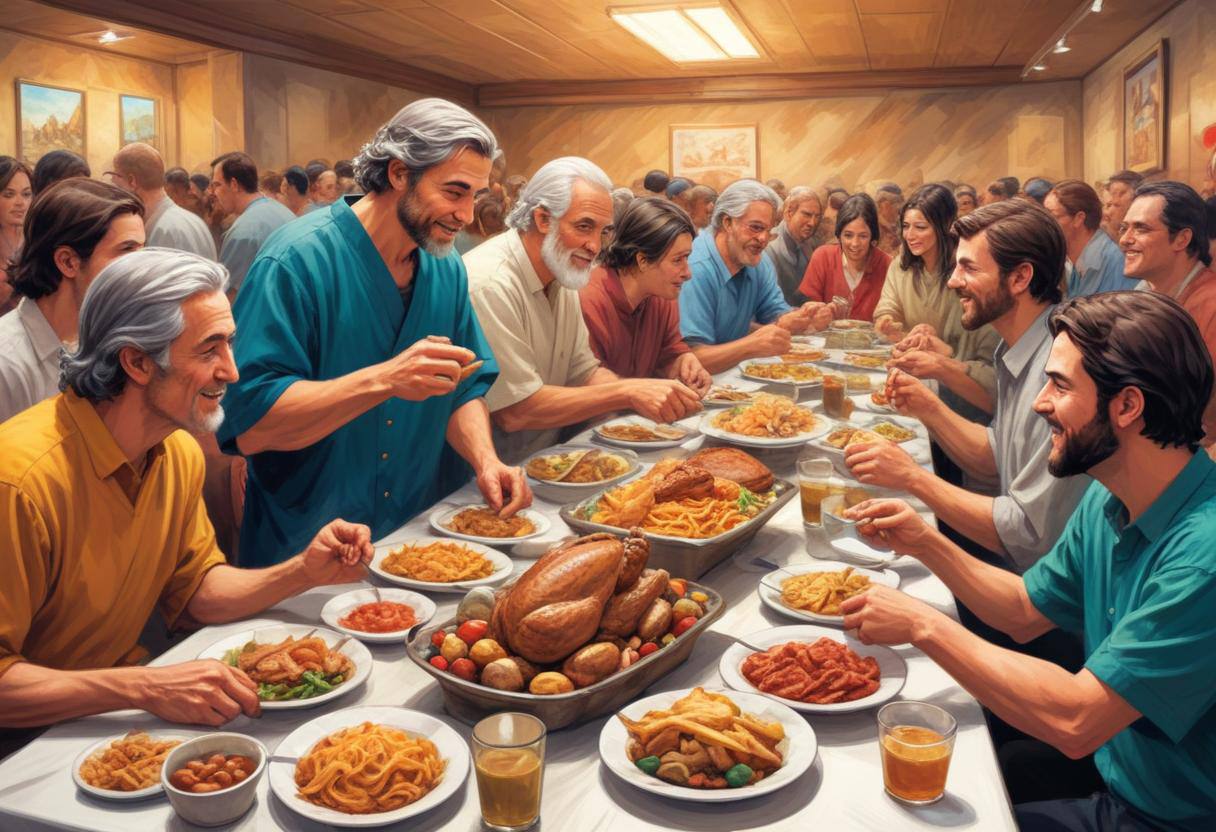
And they devoted themselves to the apostles' teaching and the fellowship, to the breaking of bread and the prayers. And awe came upon every soul, and many wonders and signs were being done through the apostles. And all who believed were together and had all things in common. And they were selling their possessions and belongings and distributing the proceeds to all, as any had need. And they were selling their possessions and belongings and distributing the proceeds to all, as any had need. And they were attending the temple together and breaking bread in their homes, they received their food with glad and generous hearts, praising God and having favor with all the people. And the Lord added to their number day by day those who were being saved.
— Acts 2:42-47
“To those to whom He is a Father, the church must be also a Mother.” — John Calvin (citing the North African church father Cyprian)
In our previous article, What is the Church #1, we discussed that the Church (Ekklesia) is made up of those who have been called out of the world by the Lord and into union and fellowship (Koinonia) with Christ and communion with each other.
We have outlined the parameters that define the local church. According to these parameters, not all Christian institutions can be called local churches. From the very beginning, it was never Jesus’ intention for us to walk this journey of faith alone. Christianity and believers thrive in family, not isolation.
At the heart of a church family are Sunday gatherings. They are indispensable for a local church and the tip of the iceberg. Sunday gatherings are a visible sign and the declaration of our highest allegiance to our King and Lord Jesus Christ. Hence, I cannot stress enough the importance of Sunday gatherings. But just as the iceberg’s strength and depth lie beneath the surface, so does the true strength of local churches lie in the fellowship (Koinonia) we share with Christ and one another throughout the week.
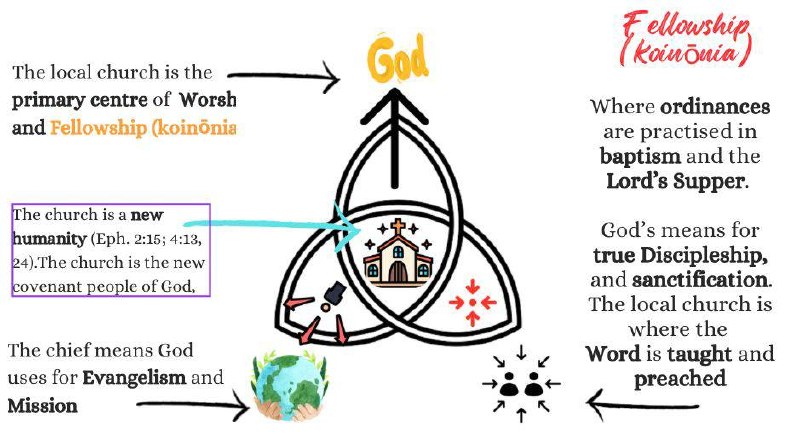
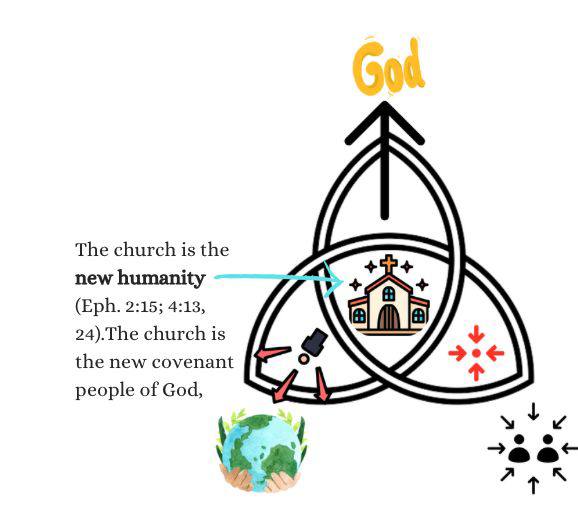
The Church is the new humanity, the new covenant people, as we read in Ephesians 2:15, “by setting aside in his flesh the law with its commands and regulations. His purpose was to create in himself one new humanity out of the two, thus making peace.” This new humanity has a threefold mission: upwards towards God, inwards towards each other, and outwards towards the world. If any of these aspects are missing, the local church does not reflect the original design of God’s covenantal people.
The mission of the Church contains three conceptual directions: Upward, Inward, and Outward.
In the following articles, I will dedicate one article to each direction. I will begin with the fellowship dimension of the church. In this article, I will answer three main questions: What is the biblical fellowship? How do we live out Koinonia? What are the greatest enemies of Koinonia? I will also include a practical application.
Fellowship — κοινωνίᾳ (koinōnia)
Koinonia is a Greek term meaning “holding something in common.” It appears 19 times in the New Testament (e.g., Philippians 2:1-2, Acts 2:42, 1 John 1:6-7). In the New Testament, Koinonia is translated as “communion, fellowship, partnership, participation, contribution, sharing.”
For instance, in 2 Corinthians 8:4, Koinonia is translated as “sharing in the ministry to the saints” (NRSV), and in Philippians 3:10, when Paul is talking about knowing Christ and sharing in His sufferings, he writes, “I want to know Christ—yes, to know the power of his resurrection and participation in his sufferings, becoming like him in his death.” He used Koinonia, which is translated to fellowship, sharing, and participation.
Koinonia is most closely linked to the concept of holy and covenantal fellowship. Joseph Henry Thayer’s Greek-English Lexicon of the New Testament defines it as “fellowship, association, community, communion, joint participation.” Its origin is in the Greek word koinonos, which means partner, sharer, and companion. This community fosters strong bonds and close involvement among its members, promoting a sense of shared participation.
John Tillman explains, “The word in English primarily refers to the ‘fellowship’ of the church as a community. This meaning is not incorrect, but another interpretation is of being a business partner or having a ‘share’ or investment together in a business.”
Geoff Tomath, in his definition of Koinonia, writes, “Participating in something divine and eternal, something greater than we could ever be or do on our own. It means being caught up into a belonging or partnership which God has created and sustains. That is the Christian fellowship.”
From these definitions by Tillman, Tomath, and Thayer, we can see the depth of the word Koinonia. It is the bond of spiritual unity in Christ Himself. It is a unique relationship with Him and other Christians as part of Christ’s body, which goes beyond superficial relationships. It carries a sense of commitment toward others.
The writers of the New Testament remind us frequently that the church is a family. Notice it’s not like a family; it is a family we belong to. Listen to what Paul says to the Corinthians in 1 Corinthians 10:17, “Because there is one loaf, we who are many are one body; for we all partake of the one loaf.” And to the Romans, he writes in Romans 12:5, “So in Christ, we who are many are one body, and each member belongs to one another.”
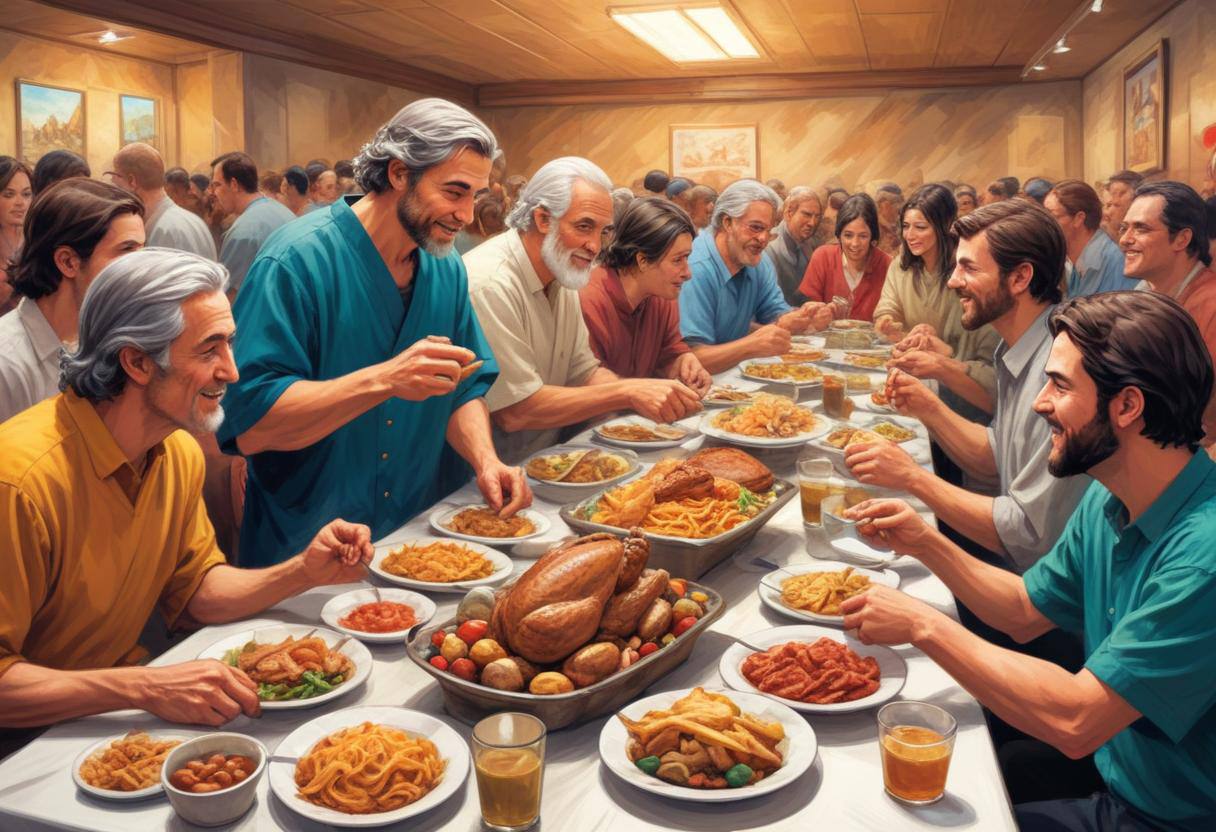
My question is: are we seeing that today in the church in our age? Are we really committed to one another in our local churches?
Paul reminds the Ephesians of the truth of one family, writing in Ephesians 2:19: “Now, therefore, you are no longer strangers and foreigners, but fellow citizens with the saints and members of the household of God.” This fellowship produces mutual and committed participation in God’s worship, work, and will being done in the nations.
Koinonia goes deep beyond mere fellowship; it embodies intimate unity rather than surface-level relationships. It’s not just having a quick coffee and tea in the church hall for a few minutes. It’s not just asking on the run how someone is without really being intentional about knowing how your brothers and sisters are doing.
As we have seen earlier in the discussion, the word is translated as “communion, partnership, participation, contribution, sharing.” Is this how we practice fellowship today in our churches? Do we see our local churches as our family where we are nurtured and nurture others?
In the Ekklesia (local family), spiritual growth happens. Koinonia is viewed by the New Testament authors as a non-optional environment for spiritual growth. Think for a moment about the concept of family. What are your observations? Each member has unique gifts and personalities; not all children from the same parents are identical. Yet, certain standards, values, and beliefs guide the family as a whole. Children learn accountability, and parents nurture relationships as well as offer guidance, mentoring, resources, and correction as needed. A family thrives on love, encouragement, and support. However, it’s challenging to provide these essential elements from a distance, especially if someone is rarely present or disengaged from the family. Yet, many of us look forward to the day when Jesus returns to spend eternity with Him and our local family, which we are not engaged with today.
In the biblical koinonia, we see fellowship with Christ in the horizontal direction and fellowship with one another in the vertical. It is a mutual bond with Christ, deep and eternal fellowship with each other. We cannot take one and leave the other. We cannot say we are in communion with Him but don’t want to be in communion with one another.
Paul’s Letters
While preparing this, it struck me that most of Paul’s letters would not exist without the gathered churches. Nine of his thirteen epistles were directly addressed to churches, and three of the remaining four were written to Timothy and Titus, focusing on church-related matters. Similarly, the seven letters written by other apostles like Peter, James, and John were not directed at specific individuals or churches but intended for broad circulation among all churches.
In Acts 2:42, we see corporate devotion and individual devotion: “And they continued steadfastly in the apostles’ doctrine and fellowship, and in breaking of bread, and in prayers.” This requires you and me to participate and not be spectators. Notice that the believers did not try to “devote themselves to the apostles’ teaching” alone; rather, they devoted themselves to God’s Word — together — with their fellow church members. They continued steadfastly to do these things; it was not one action in the past but something they kept doing together.
In local churches, there is a sharing of life together, growing in maturity together, ministering together, worshipping together, and witnessing together. It is an interdependent relationship.
In the Bible, Koinonia goes beyond mere friendship. You can find friendships in many different social clubs around us. But koinonia represents divinely intimate, holy unity among believers and with the Lord. This encompasses spiritual oneness in the Holy Spirit, communal living, sharing resources — from money to food — and participating in the communion of the body and blood of Christ Jesus.
Cultural Challenge
However, culture today says the contrary. Culture today encourages an individualistic style of living. It tells us, “You can do it alone and don’t need anybody else.” You can go as far as saying that as long as you have God and Jesus as your personal Saviour, you don’t need anybody else. Jessica Brodie said, “Culture today often promotes a me-first mentality, from ‘do what makes you happy’ to the pervasive selfie photo… We tend to embrace individual freedom and decision-making that reflects our own interests over those of an organized group, church, or government.”
Koinonia, on the other hand, encourages us — and if I can use stronger language, it actually demands of us — to be participants, active members in our local churches, and not spectators who are just watching from the outside or consumers who come for a Sunday feed and disappear until the following Sunday.
I want to encourage us to be alarmed by the influence of the world and the worldly views which creep into the church today. Would worldly perspectives and ideological influences obscure the truths of the Bible? Can they prevent us from seeing them vividly? Yes, I believe they can. For instance, John Stott laments the neglect of the doctrine of the church within evangelical circles. He argues that a “privatized gospel,” which focuses solely on individual salvation, overlooks the significance of the church as a saved community. As Stott writes, “One of the chief evangelical blind spots has been to overlook the central importance of the church.”
How to Live Out Koinonia?
In a practical sense, if you are reading my article today, there are a few practical steps that help us live out Koinonia today. From Acts 2:42-47, we can notice the following:
- Togetherness: They had a sense of unity. We are in this together, with the security that my brothers and sisters are for me, and we are standing shoulder to shoulder. (Spiritual gifts: 1 Peter 4:10, Romans 12:6-8)
- Hospitality and Generosity: Sharing our abundance. Generosity isn’t just about money; it includes experiences, knowledge, possessions, gifts, time, energy, feelings, words, and food.
- Presence: Attending the temple together, they were consistently present, not sporadically attending one Sunday and disappearing for the next three. They were committed to being together in their gatherings.
- Welcoming and Embracing Newcomers: Acceptance of strangers, those who are from different backgrounds and other ethnic groups.
- Encouragement and Accountability: Keeping each other accountable towards the teaching of Scripture and the pure message of the Gospel. Accountability to the way of living and ensuring that their members live in a manner that glorifies God.
- Serving and Trusting: Trusting God for His provision of gifts, finances, wisdom, and words which leads to serving one another and practising trust among church members. We often live with an “I don’t have enough” mentality — lacking time, money, capacity, and experience. This mindset makes us hold tightly to what little we have in order to survive.
By practising koinonia through these practical steps, we bring God and others into full unity with ourselves, pushing aside our own selfish concerns to embrace harmony, generosity, and one accord. It might be tough to embrace the spirit of koinonia in such a self-oriented world, but we are repeatedly called to do so. And we are given an ideal model, both in Jesus and in the disciples.
What Are the Greatest Enemies of Koinonia?
- Self: Self-centeredness, self-indulgence, self-protection, self-comfort, building high walls around oneself, defending oneself from being hurt again, self-distance, self-security, self-rights, self-preservation.
- Satan and Temptation: Spiritual warfare that seeks to disrupt unity.
- Jealousy: Envy that divides and creates discord.
- Comparison: Comparison can be a subtle yet powerful enemy of koinonia because it fosters discontent and jealousy. When individuals focus on comparing themselves to others, they lose sight of the unity and mutual support that are essential for true fellowship. This mindset creates divisions, hinders genuine connection, and prevents the community from fully embodying the spirit of koinonia.
- Overly Critical Attitudes: Harsh judgmental attitudes can create divisions and alienate members within the church community. When we focus on finding faults in others rather than encouraging and supporting them, it disrupts the unity and trust that koinonia requires. Additionally, biased views and favouritism can lead to unfair treatment and double standards, where some people are judged more harshly or leniently based on personal preferences. This undermines the sense of equality and mutual respect that is essential for genuine fellowship, causing further fragmentation within the community.
Practical Application
Your turn: How are you living out koinonia today? What new practices can you adopt to help this concept thrive in your church and community?
Conclusion
In conclusion, Koinonia is more than just a concept; it is the heartbeat of the Christian community. It calls us to a deeper, more intimate fellowship with Christ and with each other, fostering a unity that transcends superficial interactions. As we strive to embody this profound sense of fellowship, we must resist the individualistic tendencies of modern culture and embrace our roles as active participants in our local churches. By doing so, we reflect the true nature of the Church as envisioned in the New Testament — a family bound together by love, commitment, and shared purpose.
The challenges are real, and the enemies of Koinonia — self-centeredness, temptation, jealousy, and critical attitudes — are formidable. Yet, by committing to practical steps such as togetherness, generosity, presence, acceptance, encouragement, and service, we can cultivate a vibrant, supportive community that mirrors the early Church’s devotion.
Let us, therefore, be intentional in our relationships, steadfast in our gatherings, and generous in our sharing, always remembering that our ultimate goal is to glorify God through our unity and love for one another. In doing so, we not only grow spiritually but also become a beacon of hope and light in a world that desperately needs the transformative power of true Christian fellowship.
Stay tuned for our next article, where we will delve into the upward dimension of worship, exploring how our Sunday gatherings and daily lives can reflect our highest allegiance to our King and Lord, Jesus Christ. Discover the profound impact of true worship on our spiritual journey and community life.
Looking forward to seeing you next week on my blog :)
Also Read:
Enjoyed this article?
Get new reflections delivered to your inbox every week.