What Is the Church? A Biblical Exploration of the Local Church
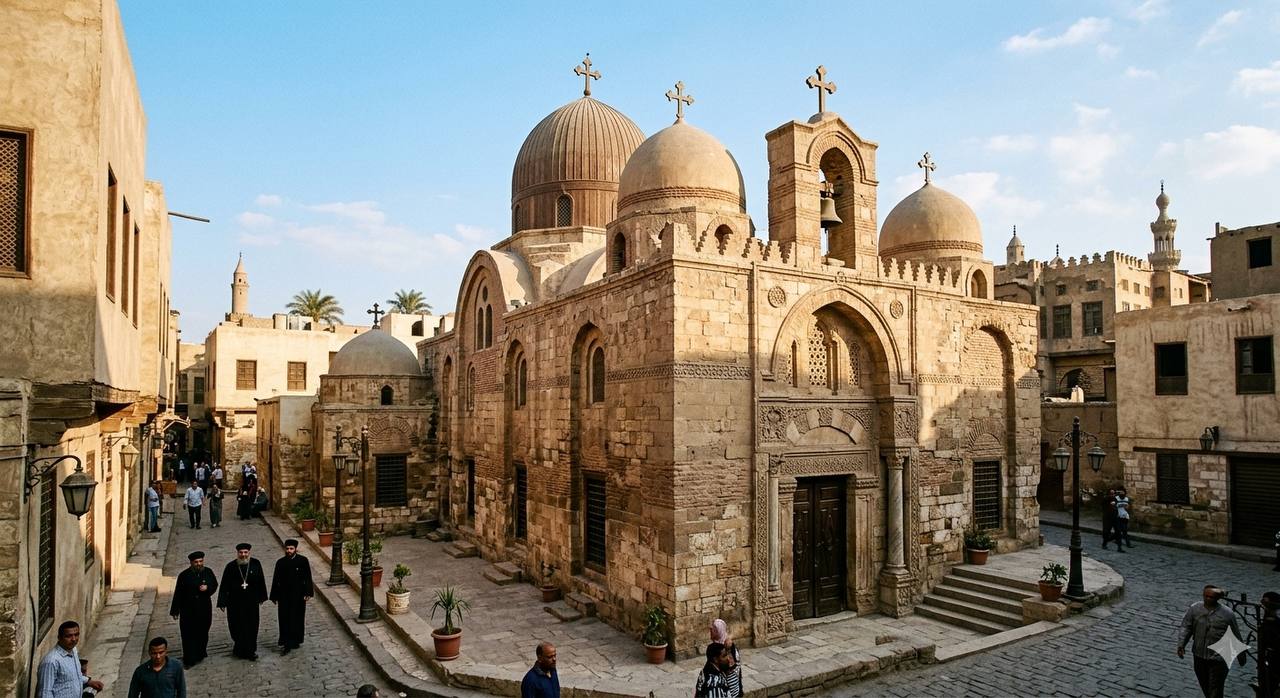
"So that through the church the manifold wisdom of God might now be made known to the rulers and authorities in the heavenly places."
— Ephesians 3:10
"Don't you realize that all of you together are the temple of God and that the Spirit of God lives in you?"
— 1 Corinthians 3:16 (NLV)
What is the Church?
This article delves into the true nature of the church, exploring if it’s merely a physical building or just a Sunday routine, or something more profound. It examines the distinction between various Christian groups like Bible studies, ministry team meetings, mission organisations, worship meetings, and the local church itself. Finally, it ponders the purpose: Does the church exist to fulfil a mission, acting as God’s instrument of change, or does the mission arise from the very absence of a local church in a community?
While many questions regarding the church exist, we’ll focus on two key areas:
- What is the church?
- How is it distinguished from any other institution?
What is The Church?
The Greek word for church, “ekklesia,” signifies a called-out assembly. It emphasizes the collective nature of the church — God’s people coming together. While “ekklesia” refers to the universal Church — the unity of all believers, living and dead — it also signifies the actual gathering of God’s people in a physical geographic location. They are the called-out ones and called to be together.
The Septuagint (LXX), the Greek translation of the Hebrew Bible, further solidified this connection, using “ekklesia” to translate the Hebrew term for “assembly” — קְהַ֖ל (qahal). Historically, “ekklesia” found its roots in classical Greek to describe political assemblies.
The word ‘ekklesia’ is mentioned 114 times in the New Testament. Out of these, 73 times refer to a congregation of believers in a specific geographic location (local church):
- “If he refuses to hear them, tell it to the church. But if he refuses to hear the church, let him be to you like a heathen and a tax collector” (Matthew 18:17).
- “When they had appointed elders in every church…” (Acts 14:23).
- “If any believing man or woman has widows, let them relieve them, and do not let the church be burdened, that it may relieve those who are really widows” (1 Timothy 5:16) (Acts 8:1, 11:22, Romans 16:1, 1 Corinthians 1:2).
However, 37 times the term refers to the Universal Church:
- “I will build My church, and the gates of Hades shall not prevail against it” (Matthew 16:18).
- “And He…gave Him to be head over all things to the church, which is His body…” (Ephesians 1:22-23).
- “To Him be glory in the church by Christ Jesus to all generations…” (Ephesians 3:21).
The Neglected Doctrine: The Church as a New Society
Can worldly influences obscure the truths of the Bible, hindering us from seeing them clearly? I believe so.
John Stott laments the neglect of the doctrine of the church within evangelical circles. He argues that a “privatized gospel” focusing solely on individual salvation overlooks the significance of the church as a saved community. He writes:
One of the chief evangelical blind spots has been to overlook the central importance of the church. We tend to proclaim individual salvation without moving on to the saved community. We emphasize that Christ died for us “to redeem us from all iniquity” rather than “to purify for himself people of his own” [Titus 2:14]. We think of ourselves more as Christians than as churchmen and our message is more good news of a new life than of a new society.
Nobody can emerge from a careful reading of Paul’s letter to the Ephesians with a privatized gospel. Stott adds, “The doctrine of the church may be one of the most neglected Biblical concepts in the twenty-first century.”
I am convinced that the New Testament writers present the gospel as a message that fosters not just individual conversion but also the creation of a new society — the church.
Martin Lloyd-Jones, another influential figure, confirms the same notion. He acknowledges the tendency within evangelical circles to prioritize individual evangelism over the church itself:
So often, we have neglected the doctrine of the church altogether. So the charge that is brought against us by members of the ecumenical movement and by the liberals has always been: You evangelicals are not interested in the church, you are only interested in personal evangelism. I am here to say that I am afraid that there is far too much truth in that charge.
Reviving the church’s centrality is crucial for a vibrant Christian life.
The Challenge of Individualism
The modern emphasis on individualism poses a challenge to this communal understanding of the church. The prevailing cultural narrative prioritizes individual desires over the collective. The “me-first” mentality can overshadow the importance of fellowship and shared purpose within the Christian community. Individualistic values are currently very prominent. This raises a critical question: do we view the church through the lens of contemporary culture or the Biblical worldview?
The Iceberg Analogy
The Church: More Than Just Sundays
Imagine the church like an iceberg. The Sunday worship is just the visible tip above the water. It is vital and irreplaceable — I cannot stress enough, because our enemy is fighting vigorously against Sunday gatherings. Hence, we have to be alert. Nevertheless, it represents only a small part of the whole.
To clarify, I use a metaphor of an iceberg to symbolize the local church. The visible part of the iceberg is the climax, the manifestation, the proof that an iceberg exists. This is the Sunday worship gathering of the local church. Sunday gatherings are an opportunity for us to publicly declare our allegiance to Jesus Christ as our Lord and Saviour.

The true depth of the church lies beneath the surface. It encompasses fellowship throughout the week, the day-to-day fellowship with God and with each other. The connection, the commitment, the love and the care for one another, the building up of the body throughout the rest of the week utilising God’s given gifts. The acts of service in the community, and the shared faith that connects believers. The commitment to share the love of Christ within the community. This hidden strength allows the church to weather any storm. It’s a testament to the enduring power of faith and community, a force that cannot be easily overcome.
In Acts chapter 2, we witness a series of events. It starts with repentance followed by baptism, which leads to salvation and forgiveness of sins. Those who were baptized were added to the family of God, forming an assembly of devoted individuals.
These individuals were committed to learning from the apostles and spending time in fellowship with each other. They would often break bread together, share what they had, and attend the temple in unity. They also showed generosity among themselves and shared food at each other’s homes, all for the praise and worship of God.
Having explored the essence of the church, let’s turn to its purpose:
What is The Church’s Mission?
The Church: Distinct and Unified
The church is more than just another social or religious institution. Its foundation lies in the teachings of Christ and the Scriptures. It serves as a unique body where believers are committed to nurturing their faith, practising fellowship, and fulfilling God’s mission in the world. Moreover, the local church is primarily a worshipping community.
Local congregations exemplify the universal church on a smaller scale. When believers gather for worship, Bible study, or ministry, they embody a representation of fellowship. However, there are distinctions between informal gatherings and the established local church. While both promote fellowship and spiritual growth, the local church assumes a more structured role, providing leadership, pastoral care, and a platform for fulfilling the Great Commission.
I am inspired by the three conceptual directions of the church’s mission, as articulated by Darrel W. Cox. These are Upward, Inward, and Outward. I plan to use these directions as a framework to develop a series of articles exploring the essence of the Church.
However, let me end with some characteristics of the local church given by some evangelical theologians. These characteristics set apart the local church from any Christian gatherings.
John Piper has outlined seven qualifications that can be used to define a local church:
A local church is a group of baptized believers who meet regularly to worship God through Jesus Christ, to be exhorted from the Word of God, and to celebrate the Lord’s Supper under the guidance of duly appointed leaders. According to this definition there are at least seven qualifications if a group wants to be church in the NT sense.
Robert Louthian and Thomas Miller depict the local church as:
A recognized creed and form of worship, a definite and distinct ecclesiastical government, a formal code of doctrine and discipline, a membership not associated with any other church or denomination, an organization of ordained ministers, ordained ministers selected after completing prescribed studies, regular congregations, regular religious services, Sunday schools for religious instruction of the young.
Conclusion: Embracing the Biblical View of the Church
It can be concluded from the previous points that there is great importance in physically gathering in a specific place on Sundays.
Understanding the church as a gathering of God’s people, united by faith and purpose, challenges the individualistic tendencies of modern culture. By rediscovering the biblical concept of the church, Christians can strengthen their faith and more effectively fulfil their mission in the world.
This local public gathering signifies to the public our allegiance, love, and worship to the Lord Jesus Christ. Therefore, watching gatherings online, teachings, and worshipping in isolation cannot replace the biblical mandate of gathering together as the body of Christ.
Also Read:
Enjoyed this article?
Get new reflections delivered to your inbox every week.