Psalm 2: When Nations Rage — Kiss the Son | Moheb Mina
🌿 The Psalm Journey — Week 2
Two Ways to End: Broken or Blessed
Introduction
Last week we stood at the doorway of the Psalms. Psalm 1 showed us two ways to live – rooted or restless, tree or chaff. But Psalm 2 takes us deeper. It shows us not just two ways to live but two ways to end.
Because here’s what we learn as we open this second psalm:
Life is hard, but God is good — and blessed are all who take refuge in Him.
Some of the early manuscripts join Psalm 1 and Psalm 2 as one unit. Origen of Alexandria and Father Matthew the Poor used to note they form a single opening to the entire Psalter. Psalm 1 begins with “Blessed is the man…” and Psalm 2 ends with “Blessed are all who take refuge in Him.”
Between those two blessings? Brokenness. The raging of nations. The laughter of heaven. And an invitation to kiss the Son.
1. The Rage: Why All the Noise? (Psalm 2:1–3)
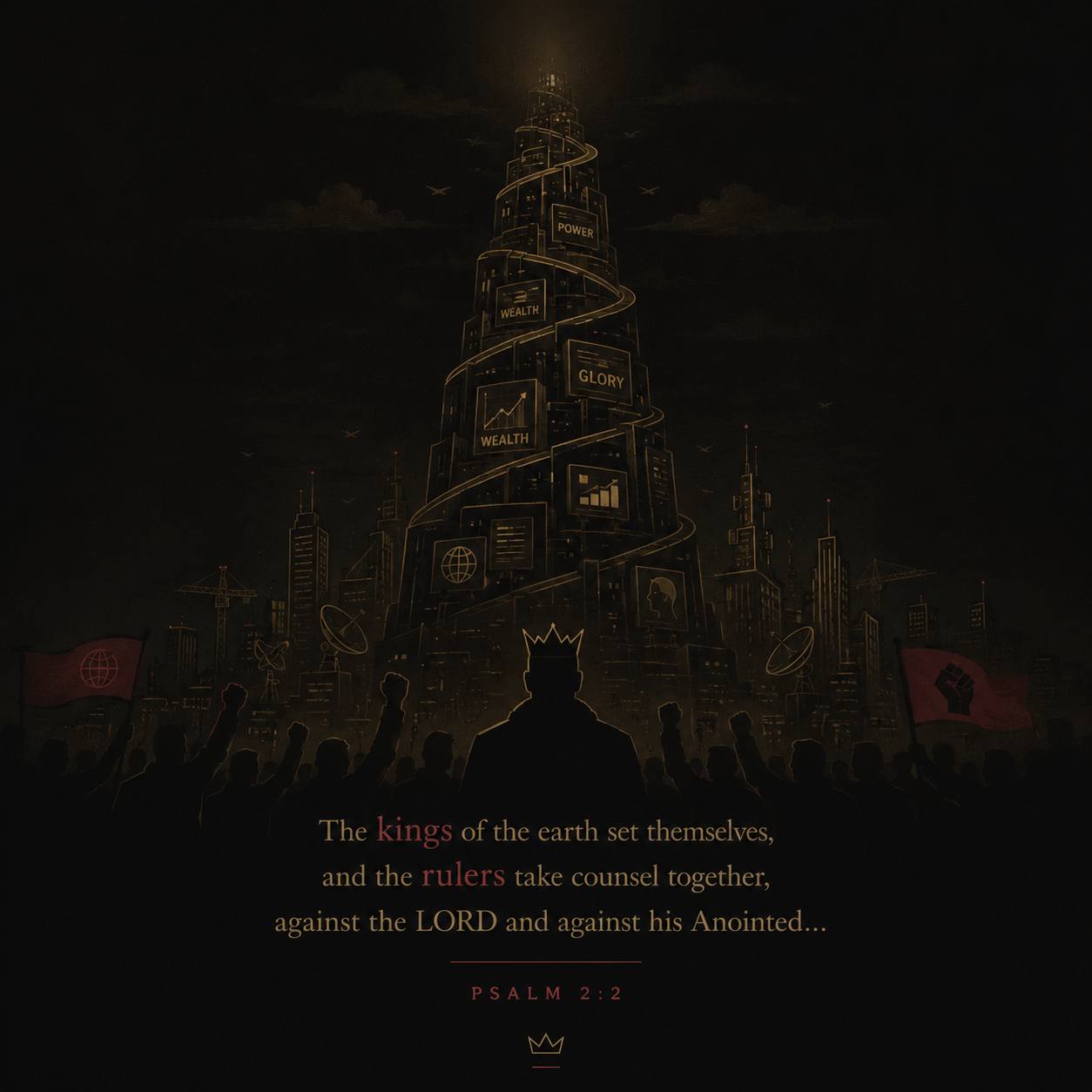
1 Why do the nations rage and the peoples plot in vain? 2 The kings of the earth set themselves, and the rulers take counsel together, against the LORD and against his Anointed, saying, 3 “Let us burst their bonds apart and cast away their cords from us.”
The psalmist looks at the world around him — and he is honestly confused. Not afraid. Just bewildered. Why? Why all this anger against God? Why do they think their plans will work? Kings assemble. Rulers gather. They take counsel together against the Lord and against His Anointed, the Messiah, the Christ.
If you could ask them, “What are you doing?” — they would say, “We are throwing off a yoke. We are breaking free.” But they don’t realise what yoke they are actually under.
Spurgeon put it this way:
“To a graceless neck the yoke of Christ is intolerable, but to the saved sinner it is easy and light… We may judge ourselves by this: do we love that yoke, or do we wish to cast it from us?”
So they cry out: “Let us burst their bonds apart and cast away their cords from us!”
Sound familiar? Nations don’t want His rule anymore. Churches don’t want His rule anymore. Individuals don’t want His rule anymore. We want to believe what we want to believe. We don’t like the Gospel of grace anymore.
It reminds me of another gathering, long ago. A valley called Babel. A tower reaching toward heaven. A people saying, “Let us make a name for ourselves.” United against God. Confident in their numbers. The assumption is always the same: If we all agree together — if enough nations rage — we will succeed. But the psalmist keeps asking: Against whom are you plotting?
2. The Laugh: Heaven’s Unshaken Response (Psalm 2:4–6)
4 He who sits in the heavens laughs; the Lord holds them in derision. 5 Then he will speak to them in his wrath, and terrify them in his fury, saying, 6 “As for me, I have set my King on Zion, my holy hill.”
Then the psalmist lifts his eyes. He stops looking horizontally at the raging nations — and looks vertically toward heaven. And what does he see? Not a worried God. Not a ruler pacing back and forth, unsure what to do. He who sits in the heavens laughs. He holds them in derision. He mocks their madness.
For the sake of illustration — and I am not anti-ants — imagine a giant. And imagine a troop of ants gathering together, holding a summit, making plans to get rid of him. What would the giant do? He might just laugh. Not because he is cruel. But because the mismatch is so enormous.
Yet God is not silent. Throughout the book of Psalms, we see God being patient — but also intervening, even when it seemed He was delayed. He takes action according to His sovereign counsel. When the nations exceed their limits, He speaks. He acts. His answer to their thinking is this: “As for me, I have set my King on Zion, my holy hill.”
Zion — a strong fortress. Not a debate. Not a negotiation. A decree.
3. The Decree: You Are My Son (Psalm 2:7–9)
7 I will tell of the decree: The LORD said to me, “You are my Son; today I have begotten you. 8 Ask of me, and I will make the nations your heritage, and the ends of the earth your possession. 9 You shall break them with a rod of iron and dash them in pieces like a potter’s vessel.”
Now the Son speaks. “The LORD said to me, ‘You are my Son; today I have begotten you. Ask of me, and I will make the nations your heritage, and the ends of the earth your possession.’”
This is not a suggestion. This is an inheritance. The Father says to the Son: Ask — and I will give you the nations. Not some of them. Not a few. The ends of the earth. And He will rule — not with a fragile human scepter, but with a rod of iron. He will dash them in pieces like a potter’s vessel.
That sounds severe. But the same hand that breaks will also shelter. The same King who judges is the same King who invites. Revelation 11:15 gives us the end of the story: “The kingdoms of this world have become the kingdoms of our Lord and of His Christ — and He shall reign forever and ever.”
4. The Invitation: Be Wise. Kiss the Son. (Psalm 2:10–12)
10 Now therefore, O kings, be wise; be warned, O rulers of the earth. 11 Serve the LORD with fear, and rejoice with trembling. 12 Kiss the Son, lest he be angry, and you perish in the way, for his wrath is quickly kindled. Blessed are all who take refuge in him.
And now — astonishingly — the psalmist turns to the very ones who were raging. He doesn’t just describe their judgment. He invites them.
“Now therefore, O kings, be wise; be warned, O rulers of the earth. Serve the LORD with fear, and rejoice with trembling.”
He is saying: Stop. Think. Against whom are you plotting? Come back. Return from your own ways. Don’t be foolish. And then comes the most tender — and most urgent — command in the psalm:
“Kiss the Son, lest he be angry, and you perish in the way, for his wrath is quickly kindled.”
Kiss the Son. The world says: assert yourself. The psalm says: kiss the Son.
In the Middle East, we still understand this. A son kisses the hand of his father — submission, honor, love. In the Coptic Orthodox Church, the congregation kisses the hand of the priest, the bishop — an acknowledgment of spiritual authority. In some cultures, people still kiss the hand of their ruler. Kissing the Son means: I surrender. I submit. I trust You. I love You. It is not cold obedience. It is warm, relational yielding.
Do not mistake the psalmist’s warning for cruelty. He is not threatening — he is pleading. Kiss the Son. Don’t perish. His anger is real — but so is His refuge. And then the psalm closes with the same word that opened Psalm 1:
“Blessed are all who take refuge in Him.”
The psalmist leaves the choice with everyone. Broken — or blessed? Raging — or resting? Perishing — or taking refuge?
5. Seeing Jesus in Psalm 2
Psalm 2 is not just ancient history. It is the gospel.
- Jesus is the Anointed — the Messiah against whom the nations raged. Acts 4:25–27 tells us that Herod, Pilate, the Gentiles, and the people of Israel all gathered together — just like this psalm said they would.
- Jesus is the Son — begotten of the Father, not created, but eternally loved. And He has been given the nations as His inheritance.
- Jesus is our Refuge — not a distant King who only judges, but a Savior who says, “Come to Me, all who are weary and heavy laden, and I will give you rest.”
To oppose the Son is to oppose the Father. But to kiss the Son — to submit to Him, to trust Him, to love Him — is to find blessing that cannot be shaken.
6. A Missional Invitation
Psalm 2 helps us look at the future with security. The nations rage. Rulers plot. Evil plans advance. But God has already won. The psalmist wants us to know: no matter how hard life is, God is always good. And every psalm that begins with hardship ends with praise. That is not a coincidence — that is a theology.
So how does this psalm invite us to live missionally?
We proclaim the Kingship of the Son. We don’t hide it or soften it. The gospel is good news — but it is also a summons. Jesus is Lord, whether the nations agree or not. And part of loving people is telling them the truth about who holds the throne. We do not proclaim His Kingship to win an argument. We proclaim it because it is the most important thing a person can hear.
We live as people of refuge. We don’t rage back at the raging world. We invite. We warn. We welcome. There is something deeply countercultural about a community that responds to hostility with an open door. We say, like the psalmist — Kiss the Son. Come under His shelter. And we mean it. The church is not a fortress that keeps people out. It is a refuge that keeps drawing people in.
We rest in divine sovereignty. This is perhaps the greatest gift Psalm 2 gives us. We do not need to be anxious about the outcome. God laughs — not mockingly, but with the secure joy of One who has already won. When we truly believe that, it changes how we carry ourselves in a hard world. We become people of unusual peace. And unusual peace, in an anxious age, is one of the most powerful witnesses we can offer.
And for those who do not yet know Jesus — this psalm is good news for them too. Because it says: it is not too late. Today, be wise. Kiss the Son. Find your blessing — not in raging against Him, but in taking refuge in Him.
Conclusion
Psalm 2 asks a question that echoes across every generation: Against whom are you plotting? And it offers an invitation that still stands today: Kiss the Son.
Two paths. Two endings. One choice.
The psalmist leaves the choice with every person, every nation, every heart. Blessed are all who take refuge in Him.
Next week we move into Psalm 3 — where David flees from his son Absalom, and the morning comes after a long, hard night. “Oh Lord, how many are my foes” 🌿
Also Read: